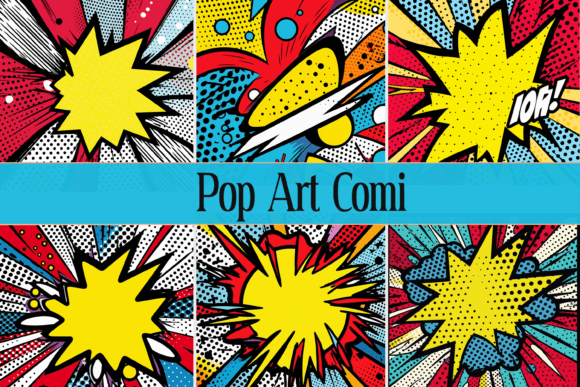
Pop Art Comic Backgrounds: A Bold Design Asset
In a digital landscape saturated with minimalism and muted palettes, the unapologetic vibrancy of Pop Art Comic aesthetics offers a distinct competitive advantage. We often discuss typography in isolation, but the environment surrounding that text—specifically the background—dictates the mood of the entire composition. Whether you are a graphic designer working on a retro-themed campaign or a small business owner creating social media assets, the Pop Art Comic style is not just about visual noise; it is about injecting energy and personality into your projects.
At its core, this design style draws inspiration from the mid-20th century movement that blurred the boundaries between "high" art and "low" culture. It is characterized by bold outlines, halftone dot patterns, and primary colors. When applied to a background bundle, these elements create a dynamic canvas that forces the foreground content to pop. The visual characteristics are unmistakable: think Ben-Day dots, sharp geometric shapes, and high-contrast color blocking. This isn't just a texture; it is a statement of confidence. For the modern content creator, utilizing a Pop Art Comic background bundle is a practical way to bypass the complexity of creating these intricate textures from scratch, offering a plug-and-play solution for high-impact visuals.
Visual Hierarchy and Brand Perception
One of the most common challenges in web design and social media graphics is establishing a clear visual hierarchy. You need your audience to see the headline first, the subtext second, and the call to action third. The Pop Art Comic style handles this aggressively. Because the background patterns are repetitive and rhythmic, they create a "stage" for your primary content. When you place a clean sans serif font or a bold display font over a halftone gradient, the contrast is immediate. The background recedes just enough to provide texture without overwhelming the message.
Furthermore, choosing this style influences brand perception. A brand that uses Pop Art Comic elements is perceived as energetic, approachable, and perhaps a little rebellious. It signals that you don't take yourself too seriously, yet you take your visual standards very seriously. For entrepreneurs and small business owners, this is a powerful tool. It suggests innovation and creativity. If you are launching a product aimed at a younger demographic or marketing a creative service, these backgrounds provide an instant brand identity shift. It moves you away from corporate sterility and toward a more human, expressive aesthetic.
Practical Applications Across Mediums
The versatility of the Pop Art Comic background extends far beyond a single use case. In editorial design, these high-resolution textures can be used to break up long blocks of text, providing visual relief in magazines or lookbooks. Imagine a feature spread where the pull quotes are set against a yellow halftone pattern—the reading experience becomes tactile and engaging.
For those involved in packaging design, the application is equally potent. A matte finish box with a subtle comic dot texture can elevate a generic product into a novelty item. It adds perceived value through design assets that feel curated and premium. Similarly, in the realm of digital paper crafting, these bundles are invaluable. Hobbyists and scrapbookers can use the 12x12 inch, 300 DPI files to create physical prints that retain their sharpness, ensuring that the "ink" looks crisp rather than pixelated.
Integrating with Modern Typography
A critical aspect of working with Pop Art Comic backgrounds is font pairing. Because the background is inherently "loud," your typography needs to be confident enough to stand up to it. This is rarely the place for a delicate script font or an ultra-thin serif font, which might get lost in the halftone dots. Instead, look toward strong, geometric typefaces. A heavy handwritten font with a thick stroke can work well for headlines, mimicking the hand-drawn nature of comic book lettering.
However, for body text and readability, simplicity is key. A clean, modern sans serif font provides the necessary legibility against a complex pattern. When you combine a premium font with a high-quality background, you create a cohesive piece of modern typography. The goal is balance. If the background is a chaotic array of shapes, your text layout should be structured and grid-based. This contrast creates a professional tension that holds the viewer's attention.
Evaluating Quality and Format
Not all design assets are created equal. When sourcing a Pop Art Comic bundle, technical specifications matter. A common mistake is using low-resolution images for print projects, resulting in blurry or pixelated designs. You should look for bundles that offer high-resolution outputs, such as the industry-standard 3600px x 3600px at 300 DPI. This ensures that whether you are designing a massive banner or a small business card, the integrity of the graphic remains intact.
Additionally, consider the format. PNG files are generally preferred for their lossless quality and ability to handle sharp lines—essential for the crisp edges found in comic art. While some backgrounds offer transparency, a solid, non-transparent background often works best for this specific style, as it ensures the color density remains consistent across different screens and printers. When you download these assets, you are investing in reliability. You want files that load quickly on websites but don't sacrifice the detail required for logo design or high-end print work.
Commercial Usage and Licensing
For designers and agencies, the usability of a creative font or background bundle often comes down to the licensing. Before incorporating these assets into client work, it is essential to verify the terms of use. Most reputable bundles are designed for commercial font and asset usage, allowing you to use them in products for sale, such as t-shirts, mugs, or digital templates. This makes the bundle a scalable asset for your business. You pay once for the resource and can apply it across multiple revenue-generating projects, provided you adhere to the license terms.
Ultimately, the Pop Art Comic aesthetic is a timeless tool in the designer's arsenal. It bridges the gap between nostalgia and contemporary design, offering a solution that is both visually striking and functionally versatile. By incorporating these backgrounds into your workflow, you are not just decorating a space; you are defining a mood and directing the viewer's eye with precision.